BrandDraft
Applications
Where the identity has to work: shirts, bags, banners, cards, signs, flyers and the web.
In use
Concept renders of both directions on real applications. They show the intent, not final artwork: text inside the images is illustrative and must be replaced with approved copy.
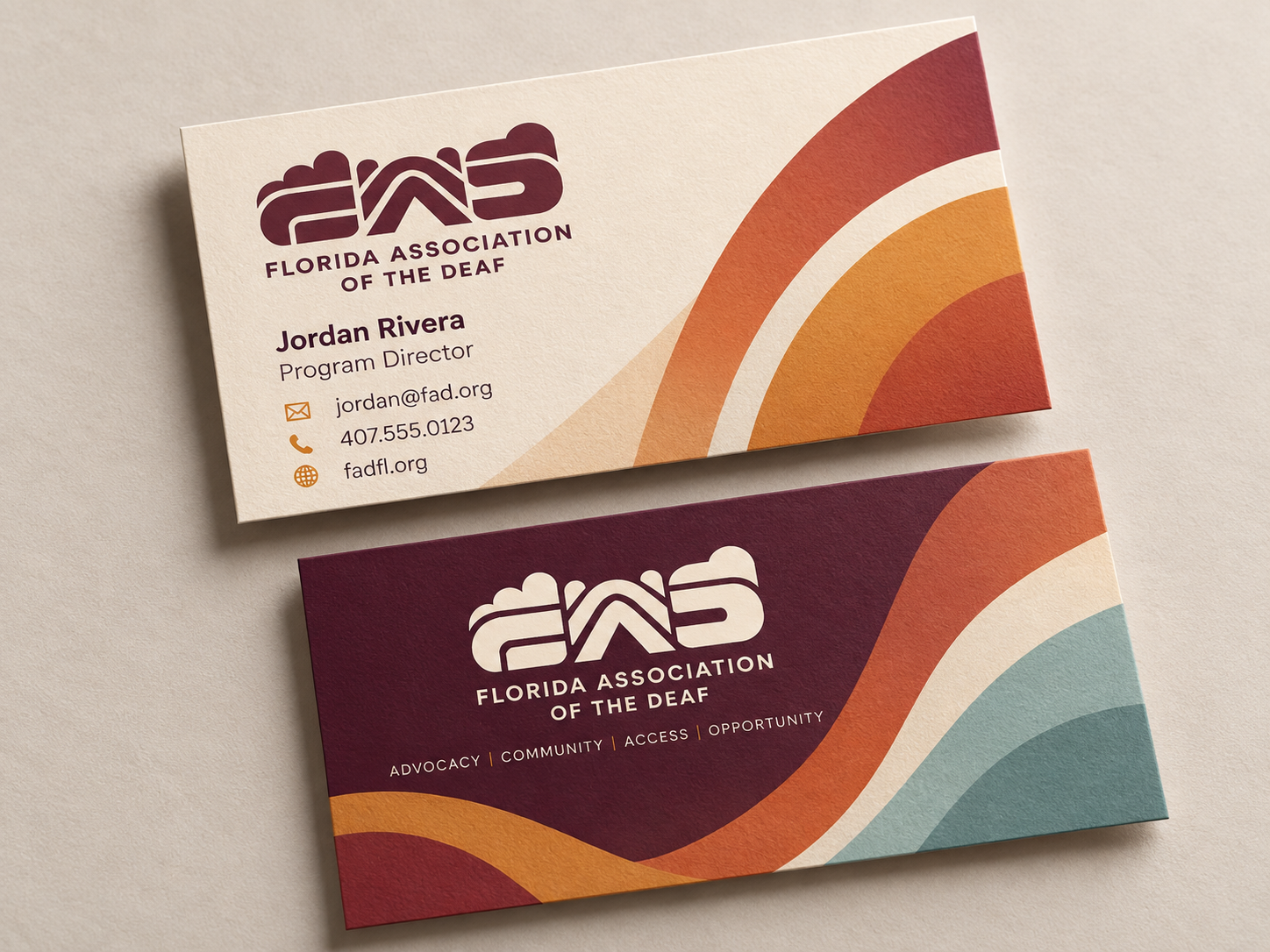
Business cards
Monogram on the front, name and contact on the back, one color for the mark.
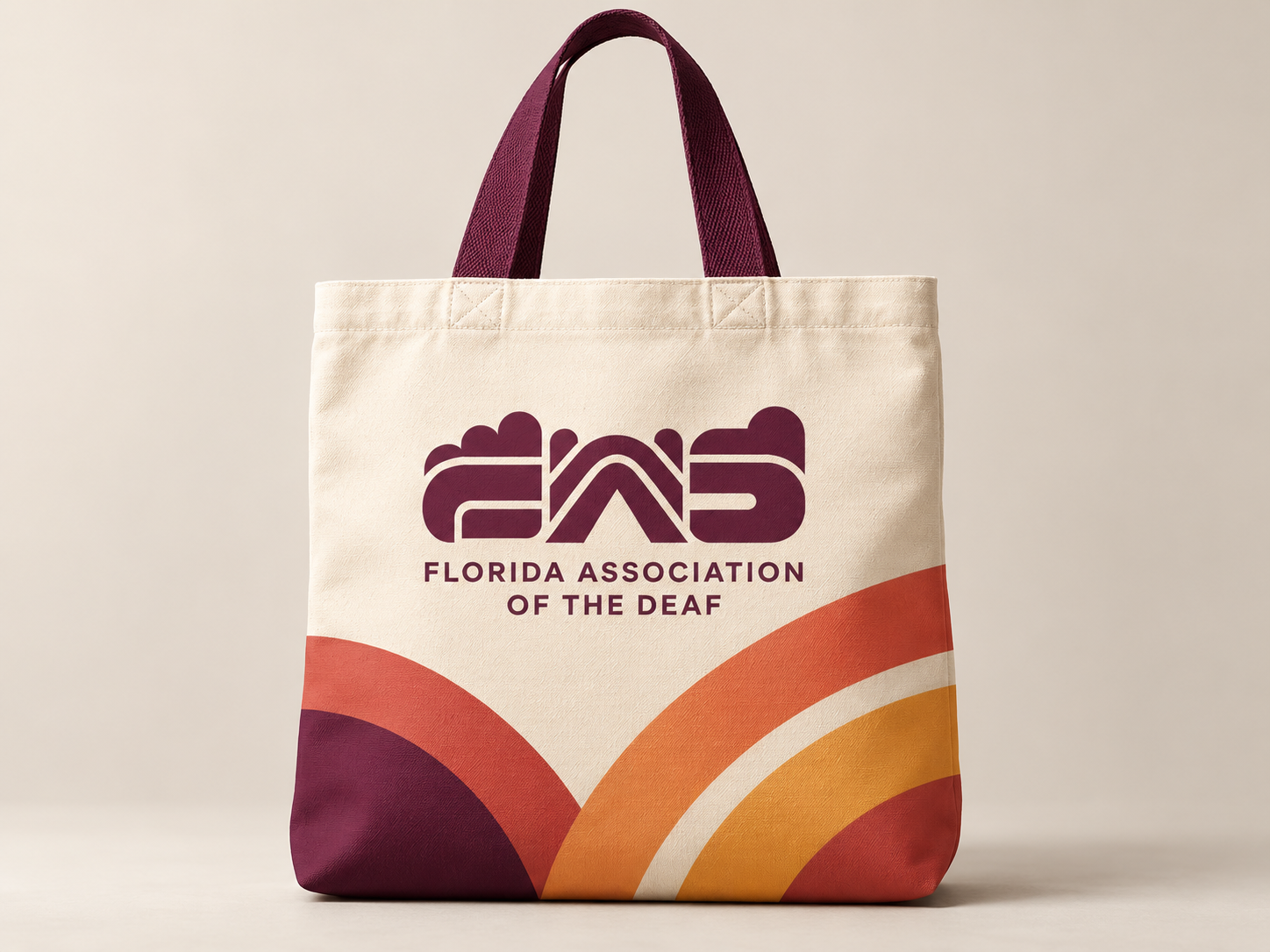
Tote bag
The wordmark alone on natural canvas, worn in daylight.
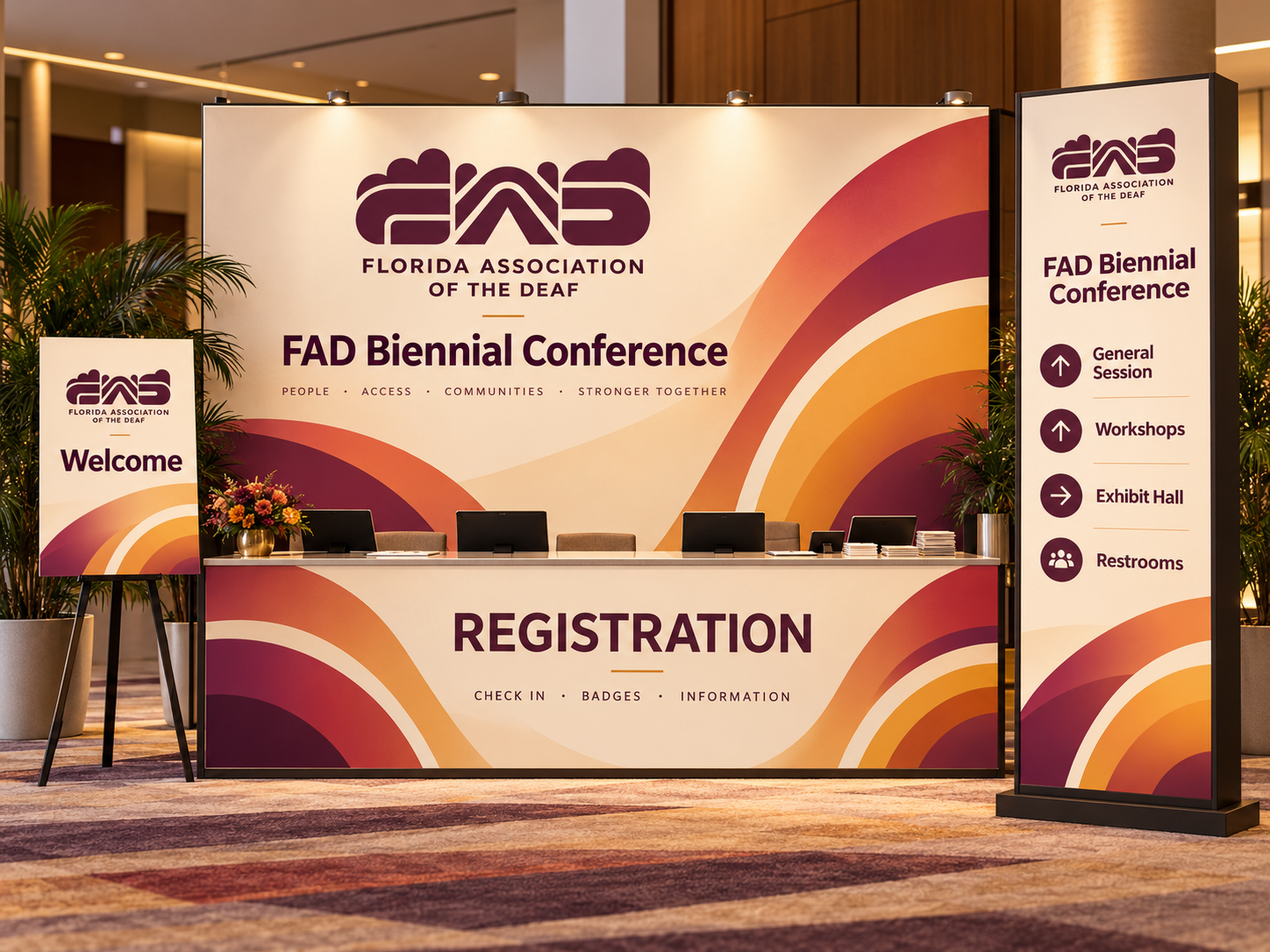
Conference environment
Registration desk, banner wall and wayfinding for the Biennial Conference.
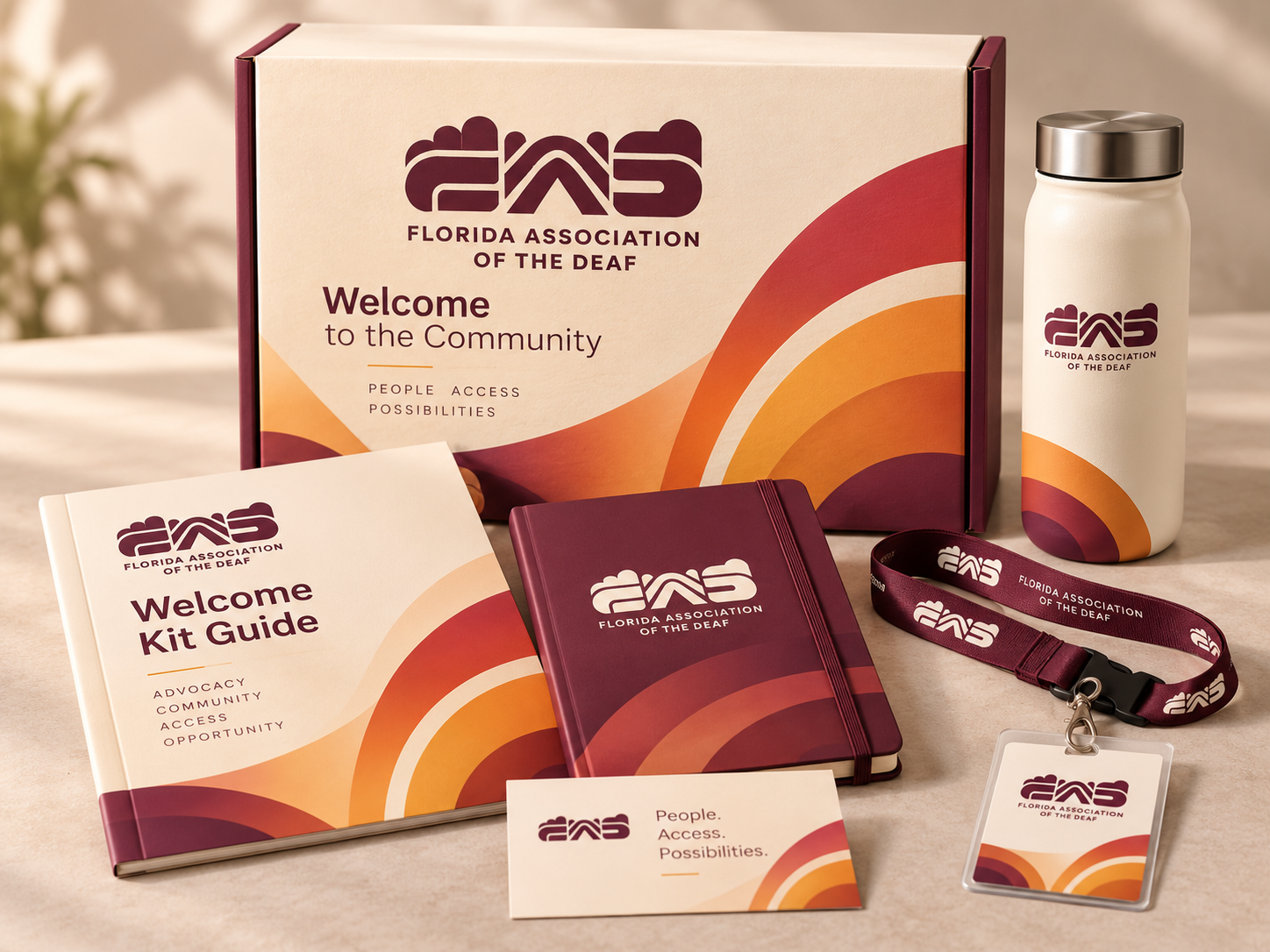
Membership welcome kit
Folder, letter, cards, envelope, thank-you card and stickers as one family.
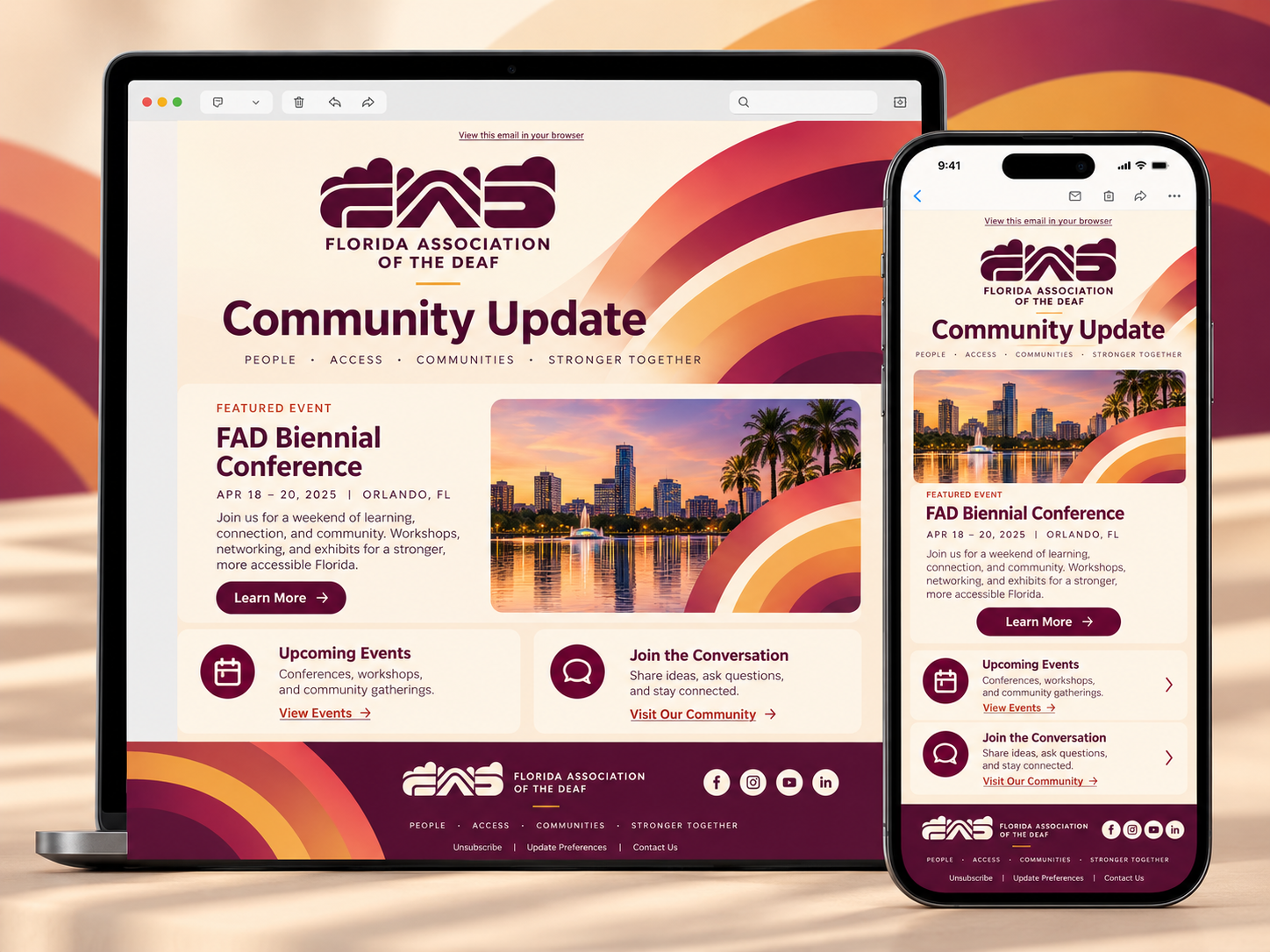
Email system
Welcome, event, advocacy alert and newsletter templates, on desktop and phone.
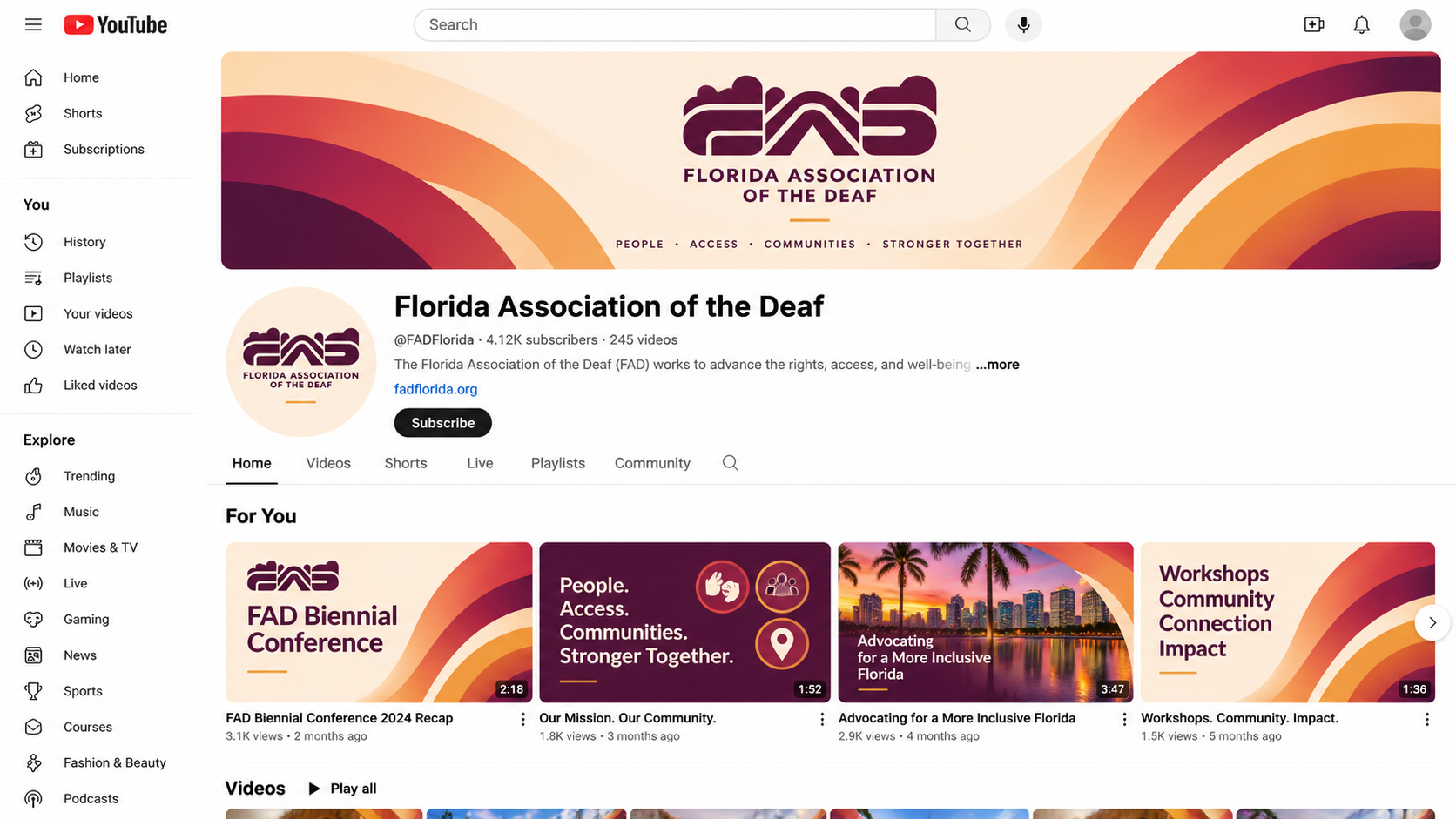
YouTube channel
Channel banner, avatar and video thumbnails.
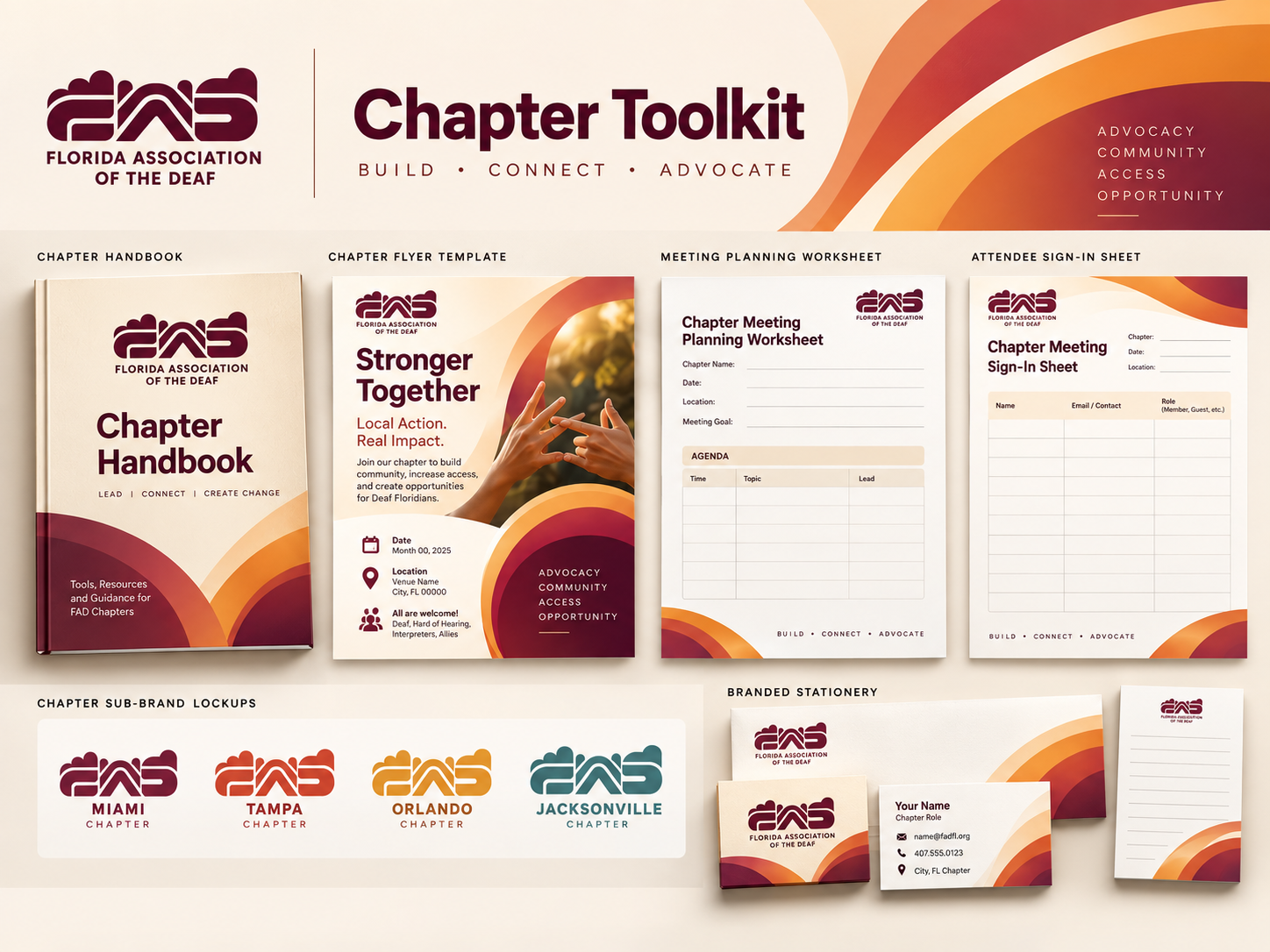
Chapter toolkit
Flyers, posters, banners, name badges and sign-in sheets for local chapters.
Zoom backgrounds
Three backgrounds per direction: clean, balanced and event.

Rules that apply everywhere
- The mark works in one color on every item.
- Text meets the contrast rules on the Accessibility page, printed or on screen.
- Every flyer, banner and event graphic states the access provided: ASL, CART, captioned.
- Printed materials that point to a video use a QR code and a short URL, and the video is captioned.
- Never cover signing hands or faces with text, UI, subtitles, logos, stickers, or CTA overlays.
Print and out-of-home
Use strong human interaction rather than isolated portraits whenever possible. Choose moments that communicate relationship visually:
- Eye contact
- Hands mid-sign
- Laughter
- Attentive listening
- Shared expressions
Leave sufficient negative space for messaging. Never place typography over signing hands or important facial expressions.
Web and digital
Let visual storytelling lead. Favor:
- Large immersive photography
- Restrained typography
- Generous spacing
- Subtle motion
- Accessible contrast
- Readable captions
- Strong keyboard accessibility
- Proper semantic structure
Video should not depend on audio to communicate its essential meaning. Avoid clutter that competes visually with signing.
Audio
When sound is used, keep it natural and secondary to the visual interaction. Possible elements:
- Room tone
- Laughter
- Table sounds
- Clothing movement
- Environmental ambience
- Understated music
Do not add unnecessary spoken dialogue to scenes where the participants are communicating through ASL. Music should support emotion without manufacturing sentiment.
Facebook page
Cover, profile mark, intro and the first posts.